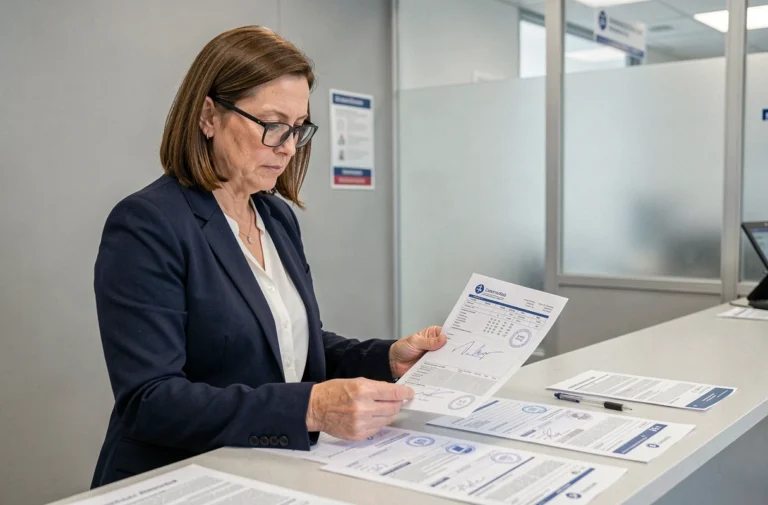
The reform of electronic invoicing that comes into effect on September 1, 2026, requires building contractors to rethink their administrative management. Between approved dematerialization platforms, e-reporting obligations, and tracking collections, the costs and tools to be mobilized vary according to the tax regime and the type of clientele. Measuring these differences allows for choosing the right platform-tool combination without overpaying.
Approved platform for building contractors: what the tool really checks
Most articles on electronic invoicing describe the regulatory timeline. They overlook the active control role played by the partner dematerialization platform (PDP) even before sending an invoice.
The approved platform does not simply transmit a file. It checks the structured format, the completeness of mandatory mentions, the validity of identifiers (SIREN, VAT number), and the consistency between net amount, VAT rate, and total amount including tax. An error in the rate on an invoice for energy renovation work, for example, is detected before transmission to the tax administration.
For a contractor managing their quotes and invoices alone, this automatic filter reduces the risk of rejection and back-and-forth with the client. Contractors exploring the budget and charges advantages on Proxichantier for artisans recognize the benefit of coupling online visibility and administrative compliance within the same ecosystem.

Obligations according to VAT regime: comparative table for artisans
The schedule and frequency of transmissions are not the same for everyone. The VAT regime of the craft business determines both the start date for mandatory issuance and the frequency of transaction data declarations.
| Criterion | Normal real regime | Simplified regime / Micro-enterprise |
|---|---|---|
| Mandatory receipt of electronic invoices | September 1, 2026 | September 1, 2026 |
| Mandatory issuance of electronic invoices | September 1, 2026 | September 1, 2027 |
| Frequency of transaction data transmission | Multiple monthly transmissions possible | Reduced frequency |
| E-reporting (transactions with individuals) | From September 2026 | From September 2027 |
The frequency of transmissions creates a very different management burden depending on the profile. A plumber under the normal real regime who invoices around twenty projects per month will need to feed their platform at a sustained pace. An electrician in a micro-enterprise will have an additional year to equip themselves and a less dense transmission schedule.
E-reporting and projects for individuals: the hidden burden
Building contractors often work for individual clients. These B2C operations do not fall under inter-company electronic invoicing, but they are not exempt from the system. They are subject to e-reporting, meaning the transmission of certain transaction data to the tax administration via the approved platform.
The same logic applies to cross-border projects: a contractor working across the border will need to transmit specific data, according to the terms specified by the BOFiP (BOI-TVA-DECLA-20-30-50-20, version of September 30, 2026).
In practical terms, this means that the contractor who only invoices individuals is not exempt from using a platform. The subscription cost to the PDP remains an unavoidable expense, regardless of the type of clientele.
Collection status: additional tracking for contractors under cash basis VAT
Contractors subject to VAT on cash receipts (common in construction, where payments often arrive after work completion) must manage the tracking of the status of each invoice. The regulations provide for structured statuses ranging from submission to collection, transmitted via the platform.
- The status “submitted” is recorded upon sending the invoice on the approved platform
- The status “collected” must be updated as soon as payment is received, triggering the VAT liability
- Any delay or omission in updating the status can generate inconsistencies detectable by the tax administration
This tracking represents a recurring task that many contractors do not anticipate. Each payment received requires an action in the platform, not just in the accounting software.

Actual budget for compliance: items to compare
The choice of an approved platform is not limited to the monthly subscription price. Several cost items add up, and their weight varies depending on the chosen tool.
- Subscription to the PDP (partner dematerialization platform): variable depending on the volume of invoices and the included features (quotes, reminders, management of deposits)
- Integration cost with existing management software: some platforms require technical setup charged additionally
- Training and onboarding: the time spent mastering the tool does not appear on any invoice, but it impacts productivity in the first weeks
- Management of work situations and deposits: in construction, intermediate invoices related to project progress require specific setup that not all platforms offer natively
However, a platform that natively manages deposits and work situations avoids the need for complementary software, which often compensates for a slightly higher subscription fee.
The overall cost difference between two solutions can represent several hundred euros per year for a contractor who issues a few dozen invoices monthly. Comparing solely on subscription price skews the analysis: it is the total cost (subscription, integration, management time, construction features) that determines the actual profitability of the chosen tool.
The most discriminating factor remains ultimately the native compatibility with the specificities of construction. A contractor who chooses their platform based on this criterion reduces their administrative burdens well beyond mere regulatory compliance.