
PSG has a budget close to one billion euros, while some newly promoted teams struggle to exceed a few tens of millions. In Ligue 1, the gap between the first and last budget has never been wider.
Since the reform of TV rights and the strengthening of DNCG controls, a raw reading of budgets is no longer sufficient to distinguish good managers from clubs living beyond their means.
Wage bill and transfer market: the real framework for reading budgets in Ligue 1
When we talk about a club’s budget, we often think of a global figure. This amount aggregates very different items: TV rights, ticketing, sponsors, commercial revenues, capital gains from transfers.
The item that weighs the heaviest is the wage bill. For the majority of Ligue 1 clubs, it represents the dominant share of expenses. A club can display a comfortable budget while being strangled by salaries that are disproportionate to its actual revenues.
Let’s take a concrete example. Two clubs with comparable budgets, around one hundred million euros, do not resemble each other if one allocates two-thirds of its revenues to salaries and the other only half. The latter retains a margin to recruit, invest in its training, or absorb an unexpected event. The former, on the other hand, is walking a tightrope.
Analyzing the budget of Ligue 1 clubs for 2026 from this angle changes the usual hierarchy. Clubs considered modest on paper turn out to be more solid than better-endowed but spendthrift teams.
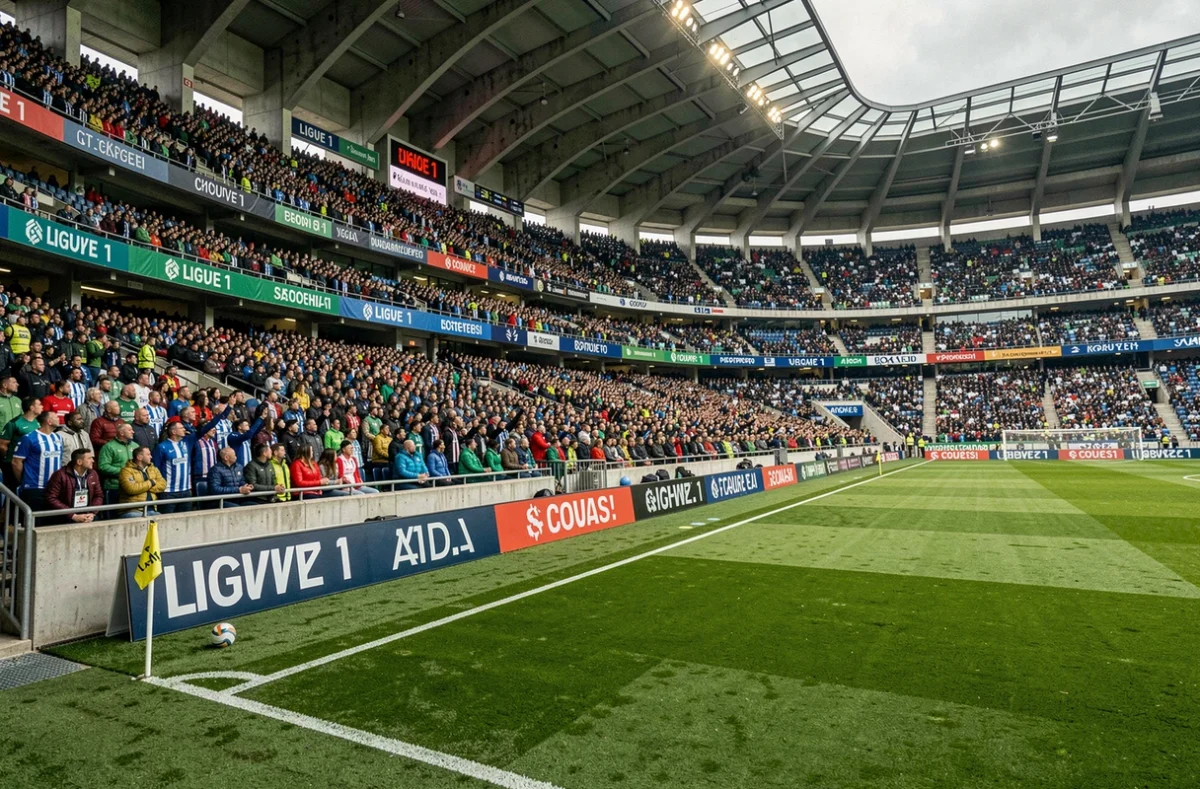
DNCG constraints and TV rights: what has changed for the 2026 season
The DNCG (National Directorate of Management Control) is not just an administrative watchdog. This body requires clubs to present balanced accounts before each season. A club that does not comply with this framework faces concrete sanctions: recruitment bans, relegation, and salary cap enforcement.
The DNCG has tightened its requirements in recent seasons. This type of constraint forces clubs to balance recruitment and accounting stability.
The reform of TV rights has intensified this pressure. Ligue 1 has seen its TV revenues decline compared to initial expectations. For some clubs, this decline has represented a significant loss of income. Others, less dependent on this item, have absorbed the shock better.
Three direct consequences of the decline in TV rights
- Mid-tier clubs must diversify their revenues (sponsorship, ticketing, local partnerships) to compensate for the loss of TV revenues.
- The summer transfer window of 2026 was generally more restrained in Ligue 1 than in neighboring major leagues, with clubs tightening their belts.
- The valuation of players trained at the club becomes a major financial lever: selling a player from the training center generates a net profit, without initial transfer costs.
Clubs owned by billionaires: a big budget does not mean good management
Paris FC, Rennes, PSG: these clubs have in common that they are backed by private shareholders with considerable means. Their budget does not solely depend on traditional sports revenues. Owners inject equity, which skews the comparison with a self-financed club.
A club supported by a billionaire can display a high budget while accumulating losses. The difference with a virtuous club is sustainability. What happens if the shareholder disengages? The club finds itself with a cost structure that is impossible to maintain.
In contrast, clubs like Lens or Angers build their competitiveness on a more autonomous economic model. Their budget is more modest, but their expense/revenue ratio remains controlled. Lens has regularly been cited among the best students in the budget/results report in recent seasons.

What the cost of squads in transfers reveals
An expensive squad is not a problem in itself, provided the club generates enough revenue to support it. The imbalance appears when the cost of the squad exceeds what current revenues can finance, forcing the club to sell or request exemptions from the DNCG.
Ligue 1 facing European leagues: a widening gap in the transfer market
The summer transfer window of 2026 confirmed a strong trend. The Premier League remains by far the most extravagant league in Europe. Ligue 1, on the other hand, stands as an intermediate market, closer to Serie A or La Liga in terms of overall transfer volume.
The TV rights of the Premier League represent several billion euros per cycle, while Ligue 1 struggles to reach a fraction of that amount. French clubs finance their transfer market primarily through player sales, not through the strength of their TV revenues.
The ranking of Ligue 1 budgets remains a useful indicator, but it only tells part of the story. A club’s actual capacity to invest depends on its cost structure, the diversification of its revenues, and the rigor imposed by the DNCG. A modest budget well managed weighs more than a large poorly managed budget. The 2026-2027 season confirms this once again.