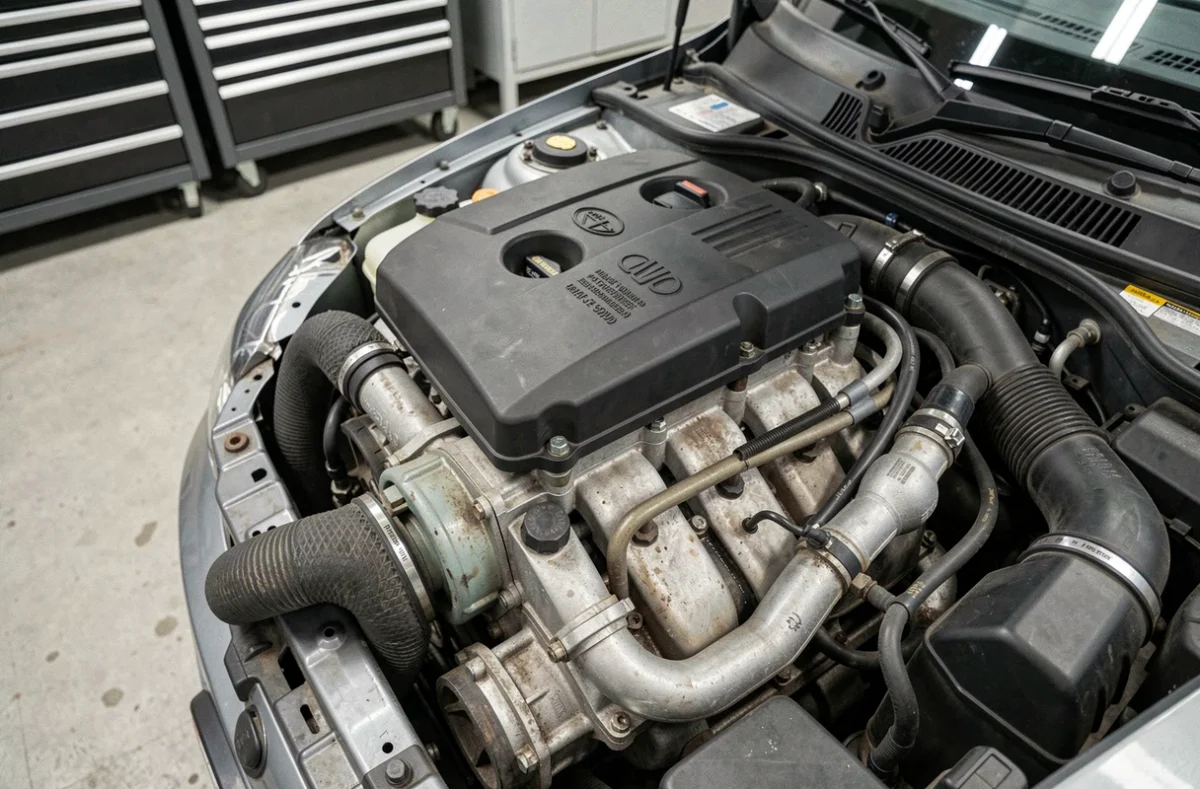
The 1.9 TDI remains one of the most common diesel engines on the European used-car market. Classified as Euro 4 when produced between 2005 and 2009, it met the emissions limits in force at the time it was type-approved. The question today is how those regulatory limits compare with the emissions it actually produces several years and hundreds of thousands of kilometres later.
Real-world emissions from the 1.9 TDI depending on the condition of its emissions-control system
Euro 4 limits set the emissions ceilings manufacturers had to meet during type approval, measured on a test bench under standardised conditions. A new 1.9 TDI met those limits. A car that has covered several hundred thousand kilometres is a different story.
Wear to the emissions-control system directly affects exhaust emissions. The oxidation catalyst, which reduces carbon monoxide and unburned hydrocarbons, becomes less effective over time. The EGR valve, which often gets clogged in these engines, can seize up or be removed by some owners, significantly increasing NOx emissions.
On the Euro 4 1.9 TDI diesel engine, the lack of a factory-fitted particulate filter on most versions is a critical issue. Fine particles released through the exhaust are not captured, unlike in Euro 5 and Euro 6 engines, which come with a DPF as standard.
A poorly maintained 1.9 TDI emits far more than it did when it left the factory. The gap between type-approval figures and real-world emissions therefore depends as much on mileage as on the vehicle’s maintenance history.

Short trips in a Euro 4 diesel: an underestimated emissions factor
The type of journeys made has a major impact on the environmental footprint of a 1.9 TDI. This engine was designed to run under steady load and at a stable temperature, typically on country roads or motorways.
In urban use, with journeys of just a few kilometres, the engine does not reach its optimal operating temperature. The oxidation catalyst does not get hot enough to do its job. Combustion remains incomplete, producing more particles and unburned hydrocarbons.
- A cold start followed by a journey of less than five kilometres produces a disproportionate amount of pollutants for the distance travelled, because the emissions-control system is not yet active.
- The EGR valve clogs up faster in city driving, reducing its effectiveness at limiting nitrogen oxides and accelerating the vicious cycle of excessive fuel consumption and pollution.
- Extended idling in traffic keeps the engine in a rev range where diesel combustion is at its dirtiest.
Short city trips cancel out some of the benefits of the Euro 4 standard compared with regular road use. The same vehicle can have very different emissions profiles depending on whether it is driven mainly on motorways or in city centres.
Emissions limit comparison: Euro 3, Euro 4 and Euro 5 diesel standards
To put the 1.9 TDI in context, the table below compares the emissions limits for passenger diesel vehicles according to their type-approval standard.
| Pollutant | Euro 3 | Euro 4 | Euro 5 |
|---|---|---|---|
| NOx (nitrogen oxides) | Highest limit of the three standards | Lower limit than Euro 3 | Significant reduction, with stricter limits introduced |
| Particulate matter (PM) | Lenient limit | Lower limit | Very low limit; DPF virtually mandatory |
| CO (carbon monoxide) | High limit | Lower limit | Lower still |
| Combined HC + NOx | Lenient overall limit | Lower limit | Significantly reduced |
The move from Euro 3 to Euro 4 brought a genuine tightening of limits, particularly for nitrogen oxides and particulate matter. The Euro 4 standard required a notable reduction in NOx emissions compared with Euro 3.
The step from Euro 4 to Euro 5 was even more significant, especially for fine particles, with the introduction of the particulate filter as standard equipment. The lack of a DPF is what most clearly distinguishes a Euro 4 1.9 TDI from a more recent diesel.
Crit’Air classification and driving restrictions for a Euro 4 diesel
A Euro 4 diesel vehicle receives a Crit’Air 2 sticker. This classification still allows it to enter most Low Emission Zones (LEZs) in France, but the situation is changing.
Several metropolitan areas plan to gradually restrict access for Crit’Air 2 vehicles in the coming years. Timelines vary from city to city, and postponements are common, but the overall trend is towards tighter restrictions.
For a 1.9 TDI owner, the issue is not just regulatory. The resale value of a Euro 4 diesel falls as restrictions draw closer. Limited access to city centres makes these vehicles less appealing to buyers who drive in urban areas.
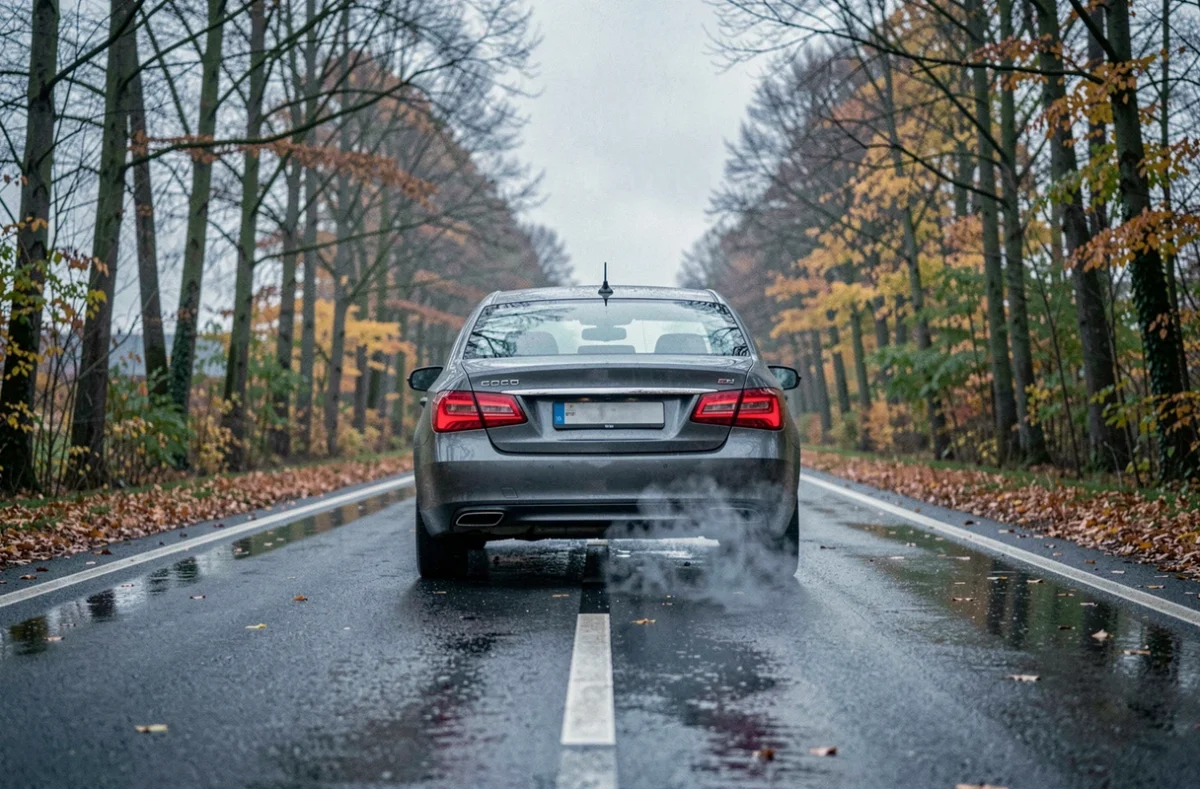
Maintaining the emissions-control system: what actually changes exhaust emissions
On a Euro 4 1.9 TDI, three components directly determine actual pollutant emissions:
- The oxidation catalyst, which treats CO and unburned hydrocarbons. Its effectiveness declines with age and mileage, sometimes without any noticeable symptoms for the driver.
- The EGR valve, which recirculates some exhaust gases to lower combustion temperatures and limit NOx formation. Clogging is the most common issue with this engine.
- The injectors, whose spray pattern determines combustion quality. Worn injectors cause incomplete combustion, producing more soot and particulate matter.
Replacing or cleaning these components significantly reduces emissions measured during the roadworthiness test. Conversely, removing the EGR valve (a common but illegal practice) increases NOx emissions beyond the original Euro 4 limits.
The environmental impact of a Euro 4 1.9 TDI depends less on its type-approval standard than on its actual mechanical condition and daily use. A well-maintained example driven mainly on the open road keeps pollution within reasonable limits. The same engine, neglected and used only in the city, far exceeds the figures that earned it its classification.