
The resale of clothing for cash refers to any operation where a third party buys back items that you no longer wear, in the form of a bank transfer, cash, or a redeemable voucher. This mechanism has been structured since the implementation of the AGEC law, which has pushed retail brands to organize collection and buyback channels directly in stores.
Understanding the different resale channels, their conditions, and their limitations helps avoid selling an entire wardrobe for a few symbolic euros.
In-store buyback after the AGEC law: what has changed
Since 2023, the AGEC law has led several major retailers (Kiabi, C&A, Decathlon, Gémo) to install kiosks or dedicated corners for the buyback of used textiles. These systems often operate in partnership with specialized players like Rediv, Patatam, or Once Again, who manage sorting and resale downstream.
The principle is simple: you drop off your clothes in-store, an operator evaluates them, and you receive a voucher usable on-site or, more rarely, a bank transfer. The eco-organization Refashion has been funding buyback incentive programs since 2022-2023, allowing certain stores to temporarily enhance the value of the deposit.
The buyback of clothing for cash in-store has a significant advantage: no ads to write, no postal shipping to manage. The trade-off is that the valuation is often lower than a direct sale between individuals. A mid-range brand sweater will yield more on a resale platform than at a Kiabi kiosk.
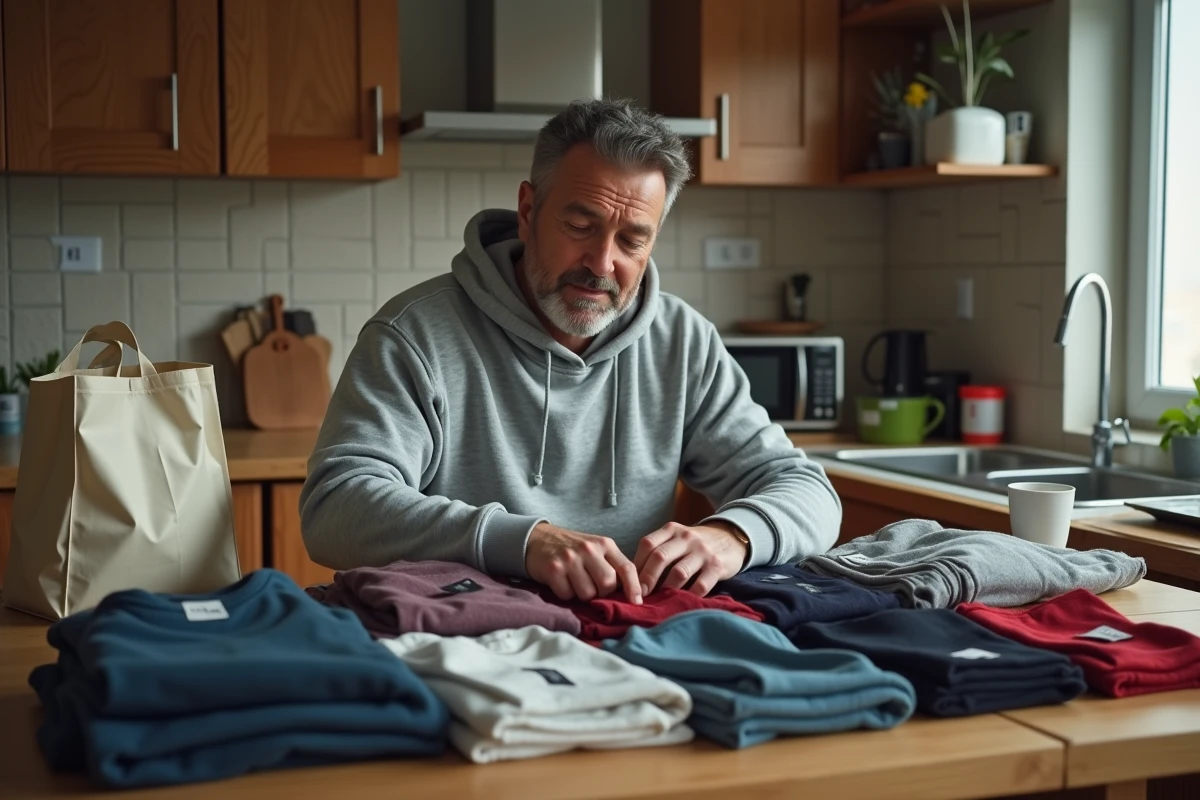
Automated estimation by AI: pricing and sorting of resold items
One of the historical barriers to in-store buyback was the refusal of many items deemed too common or too worn. AI solutions deployed by providers like Rediv or eShot Labs are changing the game.
These tools estimate resale prices based on photos and market data. Automated sorting reduces processing times and, most importantly, widens the range of accepted brands. Mid-range items that were systematically rejected a few years ago are now finding buyers thanks to more refined pricing.
For the seller, this means two things. First, the likelihood of having their clothes accepted increases. Second, the estimate received in-store or online better reflects the actual market price for second-hand goods, which limits unpleasant surprises.
Sales between individuals: platforms and wardrobe sales
Vinted remains the reference for direct sales between individuals. The process is well-known: you photograph each item, set a price, and manage exchanges with buyers. The model works well for identifiable items (visible brand, good condition, common size).
Physical garage sales and organized wardrobe sales remain a relevant option for moving a large volume in one day. The main advantage is face-to-face negotiation, which allows for selling entire lots at a bundled price.
Criteria for choosing the right sales channel
- The volume of items to sell: beyond about twenty articles, individual online sales become time-consuming. A kiosk deposit or garage sale will be more efficient.
- The range of brands: designer pieces or premium brands sell better on specialized platforms (Vestiaire Collective, Vinted with promotion). Basic items from mass retail move faster in-store buyback.
- The need for immediate liquidity: only in-store buyback or garage sales guarantee payment on the same day. On Vinted, the timeframe depends on demand.
Thrift stores and consignment shops: conditions and real margins
Physical thrift stores that buy by weight or by piece apply very variable pricing grids. Some offer a fixed price per kilo, while others evaluate each item individually. The margin for the seller directly depends on the condition of the clothes and seasonality.
A winter coat dropped off in September will be valued better than in April. This seasonal logic applies to all resale channels, but it is particularly pronounced in consignment shops that manage their stock based on immediate demand.
Points of caution before a deposit
- Check if the thrift store offers a firm buyback (immediate payment) or a consignment (payment after the actual sale, with a percentage returned).
- Read the buyback conditions: duration of sale, fate of unsold items, any storage fees.
- Consignment shops generally return between one-third and half of the displayed sale price, with the rest covering their costs and margin.

Preparing your clothes to maximize buyback
Regardless of the chosen channel, the presentation of items directly influences their acceptance and price. A clean, ironed garment, without visible damage, will always be evaluated better than a wrinkled item pulled from a trash bag.
For online sales, the quality of the photos makes a difference. A neutral background, natural light, and a framing that shows the brand label are enough to improve the sales rate. On platforms where AI is involved in estimation, a clear photo speeds up processing and reduces the risk of undervaluation.
Grouping items into coherent lots (same size, same style, same season) also facilitates in-store buyback. Operators process an organized deposit faster, and some apply a bonus when the lot exceeds a certain number of items.
The choice of buyback channel ultimately depends on what you are selling and the time you are willing to invest. Kiosks in stores are suitable for large, non-premium wardrobes. Online platforms remain the best leverage for branded items. And local thrift stores offer a quick compromise, provided you deposit at the right time of the season.